
让不懂建站的用户快速建站,让会建站的提高建站效率!

专题:对话ESG各人指点者股票入门知识_炒股配资平台_配资
新浪财经ESG评级中心提供包括资讯、呈文、培训、照应等在内的14项ESG服务,助力上市公司传播ESG理念,普及ESG可抓续发展发扬。点击稽查【ESG评级中心折务手册】在各人现象治理的棋盘上,地照应题遥远处于相对边缘的位置。谈判词,跟着顶点天气事件频发、食粮安全压力加重,以及可再生能源膨大与生态保护之间的张力日益突显,地盘退化已成为无法遁入的中枢议题。3月22日是全国水日,谈判词现象变化正在导致全国干旱频发,斟酌各人四分之三的东说念主口到2050年齐将濒临干旱风险,怎么应付水资源和地盘危险是咱们无法遁入的问题。
亚斯敏·福阿德博士(Dr. Yasmine Fouad)是联合国副文牍长兼《联合国防治凄沧化条约》(UNCCD)推行文牍,正英敢于于将这一"千里默的危险"推向各人政策议程的中心。近期在与绿色金融60东说念主论坛和新浪财经进行1.5°C Talk时,福阿德博士系统讲解了UNCCD在集合地盘、能源、水与金融范围的策略构想,以及将于本年晚些时候在蒙古举行的UNCCD第十七次缔约方大会(COP17)的中枢议题。
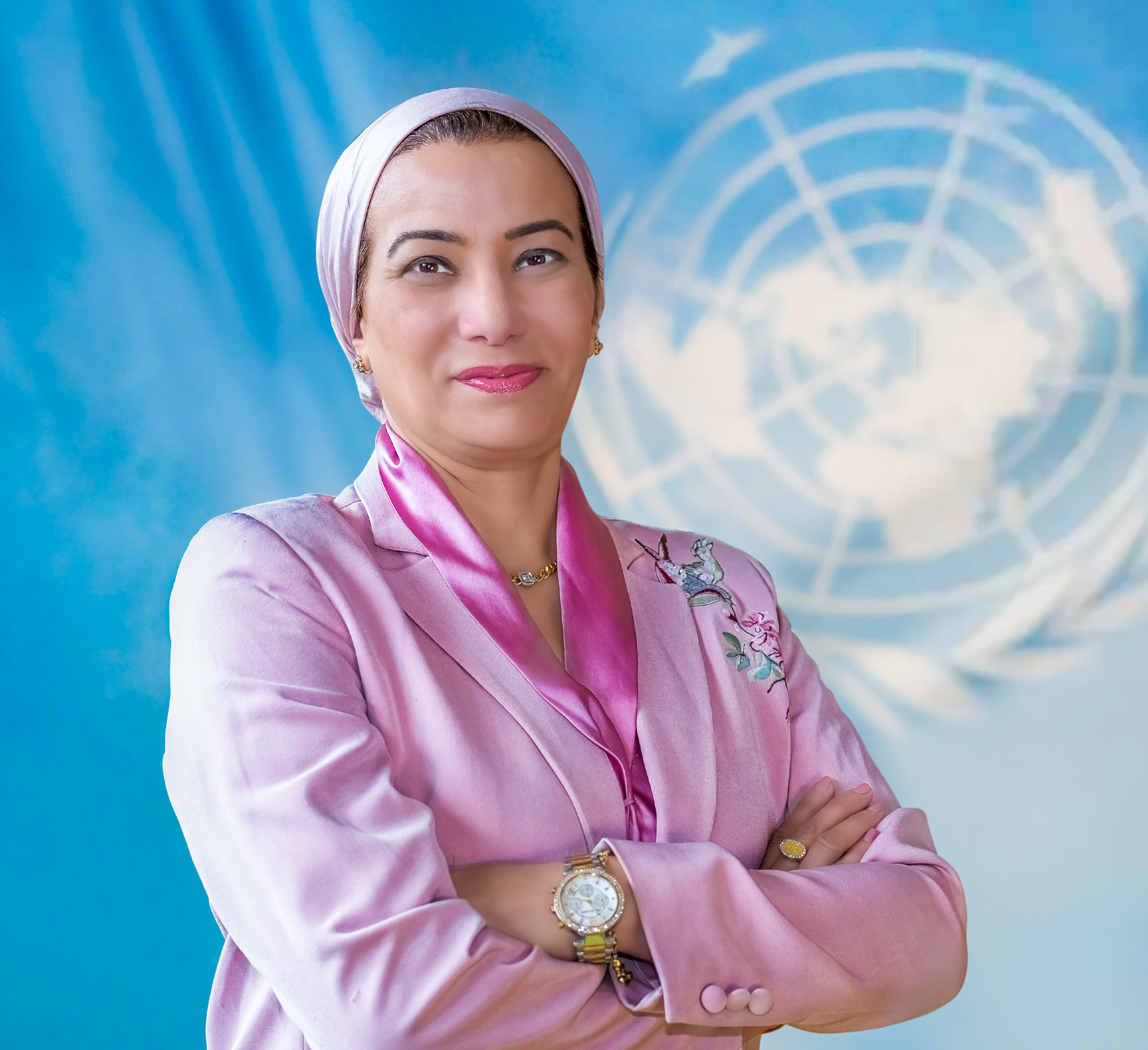 联合国副文牍长兼《联合国防治凄沧化条约》(UNCCD)推行文牍 亚斯敏·福阿德博士(Dr. Yasmine Fouad)
地盘-能源-水:一个不可分割的纽带
当被问及可再生能源膨大与防治凄沧化之间是否存在矛盾时,福阿德博士给出了明确的回应:"咱们不成将两者对立看待,它们是一个举座惩处决策的构成部分。"
这一判断建立在严峻的现实基础之上。据UNCCD统计,各人约40%的地盘仍是退化,而现象变化正是驱动地盘退化的要津要素之一。福阿德博士指出,可再生能源恰正是应付现象变化的中枢惩处决策,因此"咱们需要找到一种空洞磋议的形势,在边缘地盘和旱地上部署可再生能源景色"。
她共享了多个革命案例来阐明这种协同效应的可能性。在一些地区,农民驱动在太阳能板下培植作物——这种被称为"农光互补"的模式,既发电又农耕,达成了地盘的多重诈骗。此外,由可再生能源驱动的海水淡化景色正在将凄沧变为可耕地,展示了工夫怎么重塑东说念主类与地盘的干系。
这些案例揭示了一个核脸色念:地盘、能源和水并非沉静孤身一人的政策范围,而是精致交汇的系统。福阿德博士强调,UNCCD正在推动列国接受空洞磋议措施,确保可再生能源的发展不仅不加重地盘退化,反而成为地盘复原的能源。
撬动私营部门:从6%到无尽可能
资金缺口是地盘复原濒临的最大遮拦之一。福阿德博士潜入,当今各人地盘复原资金中,仅有6%来自利营部门。这一比例与可再生能源范围形成显豁对比——后者在2015年后诱骗了多半私东说念主本钱。
"咱们需要复制可再生能源范围的到手陶冶,"福阿德博士示意。她相配提到了多边开垦银行(MDBs)在裁汰本钱风险方面的要津作用。在2015年巴黎现象大会之后,多边开垦银行通过提供风险担保、优惠贷款等机制,有用撬动了私东说念主本钱插足可再生能源范围。UNCCD但愿将这一模式移植到地盘复原范围。
为此,UNCCD发起了"Business4Land"(地盘生意)倡议,旨在将矿业、建筑业、可再生能源等行业纳入地盘复原的行径框架。福阿德博士强调,私营部门不应只是是资金的提供者,更应参与空洞地盘诈骗磋议的早期阶段,从泉源幸免地盘退化。
绿色金融革命:韧性信用、债务互换与分类法
金融器用的革命是撬动私东说念主本钱的要津。福阿德博士详备先容了UNCCD正在探索的多项机制。
最初是"韧性信用"(Resilience Credit)。这一见地不异于碳信用,但聚焦于地盘复原和干旱韧性。企业不错通过投资地盘复原景色取得韧性信用,用于对消其环境踪影或兴奋监管要求。
其次是债务互换(Debt Swap)。在这一机制下,债权国原意减免债务国的部分债务,条目是债务国将开释的资金用于地盘复原和生态保护景色。该模式仍是在一些国度取得到手。
第三是分类法(Taxonomy)的制定。绿色债券等金融器用需要明晰的分类尺度,能力诱骗机构投资者。"统共这些器用齐需要流程测试和考证,"福阿德博士坦言。UNCCD的各人机制(Global Mechanism)动作推行机构,正与各人环境基金(GEF)等机构配合,在多个试点景色中测试这些金融器用的有用性。
海外配合瞻望:从危险照意象主动防患
2026年,UNCCD第17次缔约方大会(COP17)将在蒙古举行,主题为"复原地盘,重燃但愿"(Restoring Land, Restoring Hope)。福阿德博士对这次大会交付厚望。
她潜入,COP17将初次成立"水日"(Water Day,8月25日),突显水资源在地盘复原中的中枢性位。此外,大会还将建树金融日(Finance Day,8月24日),阑珊谈判绿色金融机制和私营部门参与。
福阿德博士期待COP17能在三个范围取得骨子性效果:草原保护决策、干旱应付政策框架,以及沙尘暴防治决策。这些议题成功干系到蒙古及中亚地区的生态安全,也具有各人真谛。
更远程的是,福阿德博士但愿COP17有时推动念念维形势的退换——从"危险照料"转向"主动防患"。她指出,当今各人对干旱的应付主如果过后反应,而UNCCD但愿建立预警系统和早期行径机制,在干旱变成不可逆挫伤之前就接收行径。
福阿德博士相配向金融机构发出了邀请。她示意,8月24日的金融日将从三个角度伸开谈判:干旱韧性、Business4Land,以及革命金融机制。"这是一个一石多鸟的契机,"福阿德博士强调。投资地盘复原不仅能达成地盘保护主张,还能同期孝顺于现象行径和生物千般性保护。
AI赋能:工夫革命的新前沿
在工夫层面,福阿德博士潜入UNCCD正在组建里面责任组,探索东说念主工智能在防治凄沧化中的应用。她相配提到了地舆空间分析和干旱预测两个范围。
通过AI工夫,UNCCD不错更精确地监测地盘退化趋势,预测干旱发生的时刻和场所,从而为政策制定和资源配置提供科学依据。这一责任将通过科学与政策委员会(CST)鞭策,确保工夫革命有时升沉为执行的政策行径。
结语:最理智的投资
对话接近尾声时,福阿德博士向后生、公众和金融机构传递了长入的信息:保护地盘不仅是环境优先事项,更是"最理智的投资"。
她指出,地盘是集合生物千般性慈祥象变化的基石。莫得健康的地盘,就无法达成碳中庸主张;莫得可抓续的地盘诈骗,就无法保险食粮安全。在这个真谛上,地盘复原是一项具有多重呈文的投资——它创造服务、增强韧性、保护生态,并为子孙后代留住可活命的家园。
关于但愿参与这一业绩的年青东说念主,福阿德博士示意UNCCD提供了集合科学、政策和伙伴干系的平台,如专注动员后生投身于地盘可抓续照料的后生组(Youth Cacus),还有促进UNCCD统共政策在性别对等方面(gender-responsive)的性别组(Gender Cacus)等。岂论是从事研究、创业如故政策责任,宽饶每个东说念主齐通过这些形势投身于与UNCCD一说念对抗地盘凄沧化的行径中来。
2026年是联合国大会成立的海外草原与牧民年,COP17温雅牧民的声息和草原生态系统,也将是查考各人地盘治理决心的远程时刻。福阿德博士但愿,届时列国有时拿出"复原地盘,重燃但愿"的具体承诺,将地盘从"千里默的危险"退换为"行径的机遇"。
英文原文如下:
Q: As the Executive Secretary of the United Nations Convention to Combat Desertification (UNCCD), you have been dedicated to promoting global efforts to combat land degradation and foster sustainable land use. Given the intertwined challenges of climate change and land degradation, issues such as renewable energy development, South-South cooperation, and deforestation in supply chains have drawn increasing international attention. To begin, how do you view the opportunities and challenges that large-scale renewable energy deployment presents for land resources and desertification control?
A: In a world that is facing vast and intensive global environmental challenges, we cannot begin the discussion by picking and choosing between renewable energy expansion or the fight against desertification or combating desertification.
In this world, I think that it's very important that we look at that as a package where renewable energy can support sustainable land management. But the challenge is how you can do that when you already know that up to forty percent of the world's land is already degraded and you need to restore those kinds of land.
Another argument when you look at it, when you are dealing with land degradation, climate change is one of the drivers for that and renewable energy is a solution in order to mitigate the impact of climate change.
And I think that one important part, if you think of integrating that, is number one, the challenge would be that more lands are degraded, so we need to restore land, but we need to expand renewable energy in order to fight climate change.
So in order to make that kind of compromise, it's important to start having a careful integrated plan and sustainable land management planning in that process at the national and at the regional level.
And there would be examples that we would use in order to expand renewable energy not at the cost of the land, because the land at the end of the day is the source for our food security.
So let us take marginal land or dry land. Can we use renewable energy? Because it takes a lot of space on those kinds of land.
But you can still be very smart while using that in a way that you still provide food for the people.
For an example of that, if we take desalination projects, although they are of a high cost right now, implementing or designing desalination projects that is using renewable energy in order to avail water for agriculture could be one good idea because still the discussion would not be only land or renewable energy.
It's land, water and energy to provide food.
This could be a good example on how you can maintain that kind of balance.
Another one when you're doing large amounts of solar energy. This solar energy in some places because of the very intensive heat may not be — if you just do it in the same place, the agriculture and the crops could not be produced, but having those solar energy installations that would act as shade in order to have agriculture and have some crops underneath could be also another idea.
There are some ideas around the world that need to be replicated and upscaled because they have already been piloted.
Q: Renewable energy projects, such as solar and wind farms, often require vast land areas and may impact ecosystems in arid regions. How does UNCCD advocate for balancing renewable energy expansion with land protection? At the policy level, what recommendations do you have for governments and private sectors to ensure that the energy transition does not exacerbate land degradation?
A: One important part is that when we are working on integrated land use planning, as much as we are synchronizing and detailing the stakeholders that would be involved, the private sector should be part of that.
But within that discussion is also the discussion of are we integrating sustainable land management into the renewable energy strategies that the country would do. That's number one at the policy level.
Number two, let us take an example from our land convention, which is Business for Land.
Are we able to inform the private sector of bankable projects that can link land management or land restoration with renewable energy so we can double the effect and the outcome and yet provide opportunities for revenue for them?
That is something that needs to be tested at the level of the private sector. The third thing, how can we do that?
Within the land convention, we're lucky that part of the decisions that came out of COP16 was an initiative called Business for Land. And Business for Land here is not only talking about the agricultural land or land restoration.
It's also talking about other opportunities where we are, for example, examining the mining sector and how can they restore land.
We are examining the construction sector and this is an opportunity where the private sector join the initiative. They announce voluntary contributions and commitments in order to sustain the land that they are using.
Q: What role does UNCCD play in facilitating knowledge sharing, technology transfer, and financial support among developing countries? Are there any success stories you can share?
A: Yeah, thank you very much for that because part of the UNCCD and the beauty of it is that we have both the intergovernmental process, which is the COP decisions and consensus, that's the regular multilateral process, but we also within the convention have an implementing arm that's called the Global Mechanism.
And the Global Mechanism is a body that within the secretariat enables translating the decisions into actual implementation by providing resources. So let me divide your question into three parts.
First of all, if there is a decision on countries that they need to have additional measures on preparing drought management plans, that is beside the land degradation plans, we provide support for that by collaborating with the existing financial mechanisms outside the convention, such as but not limited to the Global Environment Facility (GEF).
Another example of technical support that we do provide for the developing countries is actual resources that would link land degradation, climate change and biodiversity together.
Currently, we are working with the other two sister conventions on a program that would support food security and food systems for regional countries.
Last thing is we're expanding on a new modality of not only trying to find resources that would bring land closer to biodiversity and climate, but we're expanding the private sector actual engagement by getting the multilateral development banks (MDBs) to de-risk the capital of the private sector to work on restoration and especially on drought mitigation.
We have recently launched in last October a new fund that's called the DRIF, the Drought Resilient Impact Facility, in collaboration with Luxembourg and that provides a number of pipeline projects that would be implemented by the private sector in order to mitigate drought, with another facility that would help the developing countries to work on implementation of their drought management plan called Riyadh Global Drought Resilience Partnership (RGDRP).
Within both facilities, there is a knowledge hub, and the knowledge hub is meant to be exchanging experience of what works, what doesn't work, and how can we replicate and upscale in different countries.
For example, the Great Green Wall is a big initiative within the UNCCD that focuses on Africa in order to restore lands that already have been degraded, or would work more on fighting and mitigating the impact of drought.
So some projects that would, for an example, be implemented in Sahel would be replicated and upscaled in parts of South Africa.
And we have other more examples also in Asia and in Latin America, like the Peace Forest Initiative that supports exchange of knowledge and experiences among countries in the Asian region.
Q: Deforestation and forest degradation are closely linked to agricultural expansion, particularly the demand for land from livestock sectors such as the dairy industry. Recently, some international dairy companies have committed to eliminating deforestation risks in their supply chains. How effective do you consider these corporate initiatives? How does UNCCD collaborate with the private sector to promote sustainable land management practices?
A: The current figures are still behind what should be done actually in order to restore land and mitigate the impact of drought.
It's only six percent of global restoration finance would come from the private sector.
And for that reason, in COP16, there was that initiative endorsed by all parties on Business for Land initiative. We started by preparing awareness sessions and discussions with large private sector companies that are directly related to them.
By the way, everyone is using land. So if you talk about the construction, the renewable, the mining sector, the industry sector, everyone is using land. But those who are directly related to land are the livestock sectors, such as the dairy industry.
We got into that discussion with them and they are now part of the Business for Land initiative. We launched in Davos this year what's called the Champions Council that is focusing on Business for Land, and they started to look at what kind of voluntary commitments that they are going to put in order to restore land to ensure the sustainability of their business itself, number one, and number two, to reduce the risk of losing those kinds of land as long as they're still working.
In that kind of business, what they need actually, and that's what we are aiming to do within the next year, is what kind of projects can the private sector fund in order to mitigate the impact of drought and to restore land.
And from that perspective, we are preparing a package of projects that comes from the drought management plan from the government in order to be implemented by the private sector.
But that still would need the intervention of the multilateral development banks to de-risk their capital, very similar to the story of renewable energy.
If we go back to 2015, we would find that the cost of renewable energy was very high, the technology cost was very high.
What happened so that these technologies would be accessible and affordable within the developing countries?
It was the intervention of the multilateral development banks to de-risk the capital.
We're doing the same with the land. It's a journey. It's a long journey.
I cannot say it's an easy one, but I think that we will be able to reach there once we were able to get one or two bankable projects at scale in a region that will prove their feasibility and the revenue coming to the private sector.
Q: GF60 focuses on advancing green finance, and land restoration requires substantial investment. How can green finance mechanisms—such as green bonds and carbon credits—be more effectively channeled to support desertification control and sustainable land management projects? For investors, what key indicators should be used to assess the environmental and social benefits of land restoration initiatives?
A: There could be different mechanisms that would be used in mitigating drought and fighting desertification.
Resilience Credit and Debt Swap could be mechanisms that could be utilized within the financial mechanism of the convention in order to support countries in their journey of implementing their land degradation or fighting land degradation plans.
And another one that we're looking for is taxonomy, which is another area that we are right now testing in different countries that would help encourage more sustainable land management practices.
We will have an opportunity to test that within the upcoming two years because we will start working on the new strategic framework for the UNCCD. So whatever targets we will be putting — if we say we need fifty percent of the degraded land to be restored by 2040 or 2050 — we will need to have more innovative financial mechanisms such as those mechanisms, but they need to be tested first at the level of the country.
Carbon credit had proved in some places, it did not prove in other places, but we need also to ensure that the different developing countries are able to achieve their sustainable development not with so much debt within their economies.
Q: Later this year, the COP17 to UNCCD will be held in Mongolia. What are your main expectations for the conference?
A: We are expecting more work that would be done as a people-centered approach.
So one part is the operationalization of the Indigenous Peoples caucuses, the Local Community caucuses, and continue on the Gender and Youth caucuses because the UNCCD is a human-centered convention that should not only serve the parties but serve the people in a way of restoring land, restoring hope, which is the theme of the COP17 and giving hope to the people that we will be able to do it and multilateralism is still working.
Another part is the interlinkage between land and water nexus and that would be the first time that the UNCCD would endeavor into a whole day on a Water Day because you cannot work on water resources management, sustainable water resources management, if you don't have healthy soil and you cannot ensure healthy soil to be sustainable if you're not efficiently using water.
So the connection is very clear and we hope that we will be able to start that discussion in COP17, which is the first COP among the Rio Conventions that will take place this year in 2026.
From people to land and water, we aim to expand on the topic of food systems and food security because that would also be one part of the discussion that we would like to advance forward based on the agroforestry initiatives that supported small farmers in COP16.
We would like to engage more private sector into that discussion and move from Mongolia to Armenia and then to Turkey to have that discussion more at the operational level and not only at the political level.
How can we access more resources?
And last but not least, one of the important things that would be there for the investment packages is rangeland.
Mongolia is a country whose economy depends on rangeland and there could be huge opportunities if we are talking about the private sector engagement is to look at what will be the rangeland investment pipeline of projects that could be announced during that COP.
And there is good cooperation with the Business Council for Mongolia in planning into that.
And last but not least, responding to the needs of the developing countries, especially Africa, when they called for more work on drought, we will spare no efforts with the current COP16 presidency and the incoming COP17 presidency in ensuring that there will be a decision on drought, but also to have more resources that would be announced during that COP to work more on the proactive approach of implementing planning projects that would mitigate drought rather than reactive.
We cannot continue only in this world to manage crisis.
We need to be more proactive because simply prevention is less costly than managing the crisis.
Q: Given the current international situation, what specific outcomes do you hope to achieve at COP17?
A: A rangeland decision, which will be new to our process, and that has been also requested by a number of parties.
A second outcome that we would like to achieve is on drought, whether that will be a specific drought decision or a drought policy framework that would keep the discussion moving forward.
And another one which is also very important that maybe is not felt within the convention on land, which is the sand and dust storms.
Because the more you invest on sustainable land management practices, the more you mitigate the impact of sand and dust storms that would affect the business, that would affect the health of the people and the citizens.
This is something that we are now investing more time and effort and resources to come up with a decision that would bring more actions on the ground, such as the Global Sand and Dust Storm Implementation Initiative that will be launched in this COP and an actual decision would be there.
These are the mainly three outcomes.
Q: What message would you like to convey to the youth and the wider public who are concerned about climate change and land issues? How can they participate in supporting global efforts to combat desertification and restore land?
A: I would say that the UNCCD provides a unique opportunity for all stakeholders with the different caucuses that we have — the Gender, the Youth, the Indigenous Peoples and the Local Community — to connect science, policy and partnership for implementation on the ground.
So seize this opportunity and come to COP17 with your voices loud and clear with your ideas. And right now we're starting this kind of consultation with the youth and the local community online so that we would prepare for that.
And even the young parliamentarians would have a big role to play, which is different than all other COPs that we are getting the parliamentarians as part of that discussion.
The other message that I would like also to deliver is that protecting land is no more only an environmental priority, but it could be the smartest investment that we can put to ensure not only sustainability of the land management, but also the business case that could be articulated as land is the cornerstone of bringing closer biodiversity and climate change into that part.
Q: What messages do you have specifically for financial sectors?
A: I would invite them to come to the Finance Day that will take place on the 24th of August because there would be a big opportunity for them to look into the bankability of land restoration through different angles.
The first one is the drought mitigation or mitigate the impact of drought and drought resilience, where we would have the different facilities of the DRIF, the RGDRP, IDRA (International Drought Resilience Alliance), and these are all mechanisms within the UNCCD that can provide visibility to that.
The second one is the Business for Land, where the financial sector will find a huge number of private sector companies that are ready to restore land, but they would need to have more assurance from the MDBs for de-risking the capital.
The third discussion that would take place is what kind of innovative financial mechanisms that could accelerate land restoration from the experience of those financial institutions, especially that there has been a lot of trial and error in other sectors through different mechanisms that we spoke about like taxonomy, like debt swap, like green bonds.
All these things to be part of that discussion.
And last but not least, I think that we will not miss the opportunity of linking land, climate and biodiversity, so it will be a big win for the financial institutions to hit the target of land and working on that because you're hitting more than one stone in that part. Thank you.
Q: AI is really a hot topic nowadays. We talk about AI and using AI in different sectors. How do you envision AI contributing to the fight against desertification and land degradation?
A: That is a discussion that we're having internally in-house on how can artificial intelligence be of a transformative nature to the fight against desertification, the work on land degradation and drought.
We are forming a task force within the UNCCD to look into how, first of all, AI can be introduced within the institution as part of our institution in the regular day-to-day work. But how can AI be further applied within, for an example, the geospatial work of figuring out the places for the drought, what would be the possible quick solutions?
Because you cannot have a one size that fits all.
So this discussion is still ongoing within our work, but also will be going through the science and policy interface with the scientists that we work on as part of our CST (Committee on Science and Technology).
新浪财经ESG评级中心简介
新浪财经ESG评级中心是业内首个汉文ESG专科资讯和评级团员平台,英敢于于宣传和推行可抓续发展,包袱投资,与ESG(环境、社会和公司治理)价值理念,传播ESG的企业实践行径和榜样力量,推动中国ESG业绩的发展,促进中国ESG评估尺度的建立和企业评级的普及。
依托ESG评级中心,新浪财经发布多只ESG革命指数,为温雅企业ESG发扬的投资者提供更多选拔。同期,新浪财经成立中国ESG指点者组织论坛,联袂中国ESG指点企业和配合资伴,通过环境、社会和公司治理理念,推动建立合适中国时间特征的ESG评价尺度体系,促进中国钞票照料行业ESG投资发展。
 海量资讯、精确解读,尽在新浪财经APP
包袱裁剪:李安适 股票入门知识_炒股配资平台_配资
实盘配资平台_股票配资门户平台交易规则全览提示:本文来自互联网,不代表本网站观点。